
Quick answer: Book Korea's 2026-27 ski season group tours now — mid-July is not too early, it is exactly when the smart series get locked in. The prime window is mid-December to late February, resorts run November to March on snowmaking, and the two things that actually sell out are resort-hotel room blocks over the Christmas–Lunar New Year peak and rental-equipment allotments in the popular sizes. Agencies that contract before September hold better net rates, guaranteed slope-side or shuttle-linked hotels, and confirmed lift-plus-rental-plus-lesson packages for peak dates; those that wait until October are quoting on leftovers. Explera DMC Korea operates group ski programmes at Yongpyong, Alpensia/PyeongChang, Vivaldi Park, High1 and Phoenix Snow Park, with equipment blocks, multilingual instructors and full non-skier programming.
Why book Korea's 2026-27 ski season now
Ski is the one Korea product where the calendar, not the price sheet, decides your margin. Winter capacity is finite and heavily concentrated: a handful of Gangwon and Seoul-region resorts absorb the entire inbound market, and their peak dates overlap exactly with the Christmas holidays and the Lunar New Year travel wave from Asia and the Gulf. Once those weeks fill, they fill for everyone. Early booking is not a discount tactic — it is how you secure the inventory at all:
- Room blocks go first. Slope-side and shuttle-linked hotels at Yongpyong, Alpensia and Vivaldi Park release group allocations from summer. The peak fortnight around late December and mid-February is contracted months ahead; leave it late and you are splitting the group across two properties or busing in from town.
- Equipment allotments are the hidden bottleneck. Rental sets in the common sizes — mid-range boots, junior skis, snowboards for beginners — are allocated per operator. A 40-pax group that books in July walks onto guaranteed kit; one that books in November competes for whatever is left on the counter.
- Net rates are best before the surcharge windows. Resorts publish early-bird net tariffs that step up as peak dates approach. Contracting before September locks the lower band and shields your quote from the Christmas and Lunar New Year peak surcharges.
- Instructors in client languages are limited. English, Arabic, Chinese and Japanese ski and snowboard instructors are a scarce resource across all resorts on the same peak dates. First-booked, first-served.
- Series pricing rewards commitment. If you are running weekly winter departures, a contracted series through Explera fixes hotel, lift, rental and coach costs for the whole season — no re-quoting every file as rates climb.
The Korean ski season, dates you can quote on
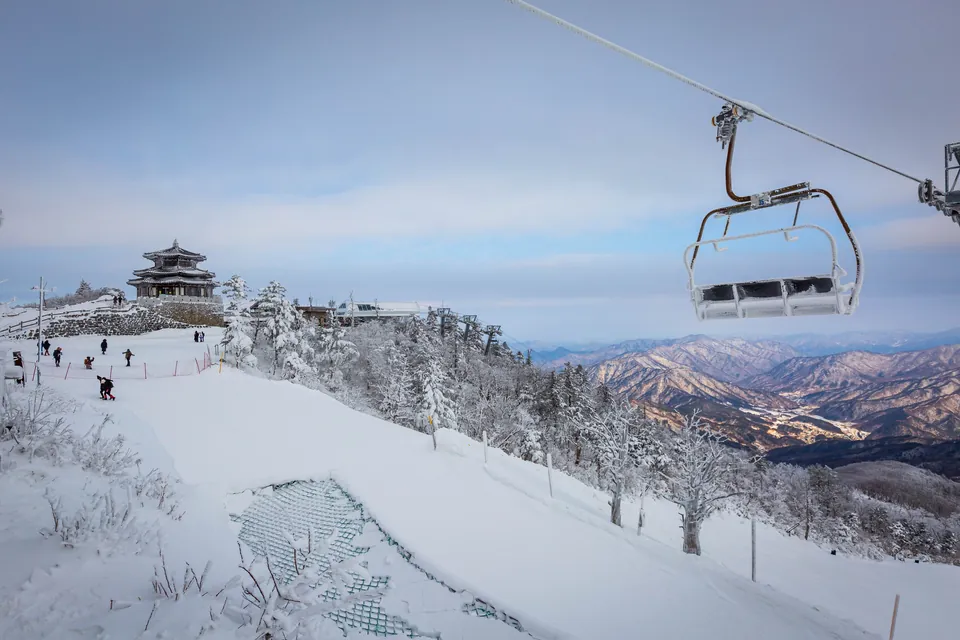
Korean resorts open on snowmaking well before natural snow arrives and stay open long after it melts, which gives a wider sellable window than the mountains' latitude suggests. Typical shape of the season:
- Opening — late November to early December: snowmaking brings the main runs online. Fewer crowds, softer pricing, and a strong window for shoulder-season groups who want the experience without peak surcharges.
- Prime — mid-December to late February: the fullest terrain, best snow, and the marquee period for Lunar New Year and Christmas travel. This is what sells out; contract it first.
- Closing — March: upper slopes and snowmaking keep several resorts running into mid- or late March. Spring-ski departures pair beautifully with early cherry-blossom scouting for two-season itineraries.
Snow is machine-assured across the whole window, so a group's ski days are never weather-dependent the way natural-snow destinations are — a genuine selling point for first-time markets.
Korea's group ski resorts, explained
Yongpyong — the largest, and the one guests recognise
Yongpyong (Dragon Valley) in PyeongChang is Korea's biggest and best-known resort, with the widest spread of runs from gentle greens to the long Rainbow courses, plus the gondola to Dragon Peak for non-skiers. It carries built-in name recognition as the filming location of Winter Sonata, still a powerful hook for the Southeast Asian and Middle Eastern markets. Deep resort-hotel and condo capacity makes it the default for larger groups and multi-night stays.
Alpensia & PyeongChang — the 2018 Olympic legacy
Alpensia and the surrounding PyeongChang cluster carry the 2018 Winter Olympics halo, with modern lifts, ski-jump towers to visit and polished resort infrastructure. Terrain is more beginner- and intermediate-weighted, which is ideal for first-time groups, and Alpensia sits minutes from Yongpyong, so the two combine into a single high-capacity base for series operations.
Vivaldi Park — closest to Seoul, and famous for night skiing
Vivaldi Park in Hongcheon is the go-to for Seoul-based day trips: roughly 90 minutes to two hours by coach, strong night-skiing operations under lights, and the adjacent Snowy Land snow park for sledding and non-skiers. It is the single best resort for a short-stay or day-trip ski product bolted onto a Seoul city programme, and its proximity keeps coach costs down.
High1 — high-altitude terrain for keener skiers
High1 in Jeongseon offers longer, higher runs and reliably good snow for groups with more confident skiers, paired with a large casino-resort hotel base that suits incentive and adult-group formats. It is further from Seoul, so it works best as a two-or-more-night stay rather than a day trip.
Phoenix Snow Park — freestyle heritage and a strong snow park
Phoenix in Pyeongchang hosted the 2018 freestyle and snowboard events and has a well-built terrain and snow park, making it a favourite for younger groups and boarders. Good intermediate spread and solid resort lodging round it out as a versatile series option alongside Yongpyong and Alpensia.
Day-trip vs stay-over, in one line: sell Vivaldi Park for Seoul day trips and short stays; sell Yongpyong, Alpensia, Phoenix and High1 for two-to-four-night PyeongChang- and Gangwon-based ski holidays.
Group services: from first-timers to non-skiers
- Equipment & clothing rental blocks. Skis or board, boots, poles and helmet plus jacket-and-trousers sets, pre-allocated by size for the whole group so nobody queues at the counter. Essential for tropical-market clients who own no winter gear.
- Lessons in client languages. Certified ski and snowboard instructors delivering group or private lessons in English, Arabic, Chinese, Japanese and more — booked against contracted allotments on peak dates.
- Beginner-friendly bunny slopes. Every partner resort runs gentle, magic-carpet-served nursery areas so absolute first-timers get a safe, confidence-building first ski day rather than being lost on a real run.
- Non-skier programmes. A ski file is never all skiers, and the non-skiers must be as busy as everyone else: snow sledding and tubing at the resort snow parks; the Hwacheon Sancheoneo Ice Festival (ice fishing for mountain trout, typically January); winter strawberry picking at nearby farms; and gondola sightseeing to snow-covered peaks. These keep families, spouses and older travellers fully programmed while the group skis.
Sample 5-day winter itinerary
A balanced Seoul-plus-slopes structure that suits first-time winter markets — two ski days framed by winter sightseeing rather than a pure ski marathon:
- Day 1 — Seoul arrival: airport transfer, city orientation, warm-clothing and gear check, welcome Korean dinner. A gentle first day to acclimatise to the cold.
- Day 2 — Winter Seoul & Gangwon transfer: Nami Island's snow-dusted tree-lined avenues and the Garden of Morning Calm winter illumination (the Lighting Festival that runs through winter), then coach on to the PyeongChang resort base for check-in.
- Day 3 — Ski day one: morning equipment fitting, beginner lessons on the bunny slopes, afternoon on the greens; non-skiers take sledding, the snow park or gondola sightseeing.
- Day 4 — Ski day two or ice festival: a fuller ski day for those progressing, or a group excursion to the Hwacheon Sancheoneo Ice Festival for ice fishing — a uniquely Korean winter highlight.
- Day 5 — Return & departure: transfer back toward Seoul with a winter strawberry-picking or market stop, then to Incheon for departure.
Add nights at the resort to convert this into a dedicated ski week, or compress to a Vivaldi Park day trip for shorter city-led programmes.
Winter logistics: coaches, clothing and cold prep
- Coach & equipment transport. Winter-equipped coaches with experienced mountain-road drivers, plus separate luggage and ski-carriage handling so equipment and guests move cleanly between Seoul, the resorts and the airport.
- Warm-clothing advice for tropical markets. For clients from Southeast Asia, the Gulf and other warm climates, layering is the make-or-break of the trip. We brief thermal base layers, gloves, hats and proper socks, and arrange outerwear-and-boot rental blocks so no guest arrives underdressed for a −10 °C slope.
- Cold & altitude prep. Pacing the first ski day, hydration, sun and wind protection at altitude, and clear meeting points and warm-up breaks keep first-timers comfortable and safe. Guides carry the group WhatsApp, hand-warmers and a fallback indoor plan for extreme-cold or high-wind days.
- Seasonal safety. Machine snow means guaranteed ski days, but roads and steps ice up — our drivers and guides are briefed for winter mountain conditions, and every itinerary keeps a warm indoor alternative in reserve.
B2B net rates and Explera support
Explera DMC Korea contracts winter capacity across the major resorts and sells it to the trade as fixed, quote-ready packages:
- Early-booking net rates locked before the Christmas and Lunar New Year peak surcharge windows
- Lift-plus-rental-plus-lesson packages priced per pax, with size-guaranteed equipment blocks and beginner or advanced lesson tiers
- Room-block allotments at slope-side and shuttle-linked resort hotels, held for series and reconfirmed ahead of peak dates
- Certified instructors and licensed guides in English, Arabic, Chinese, Japanese and more, allocated on contracting
- Full non-skier programming — snow parks, the Hwacheon ice festival, strawberry picking and winter sightseeing — so every guest is covered
- Winter-equipped coach fleet and 24/7 operations support from first pickup to final airport drop
IATA: 96215733 | Email: b2b@explera.kr | WhatsApp: +66 93 656 8090
Request 2026-27 ski season net rates at b2b.expleradmc.com or contact the trade desk — send your group size, preferred resort, travel dates and skier-to-non-skier split, and our team returns a priced package within one business day. Book before September to hold the best net rates and peak-date allotments.