

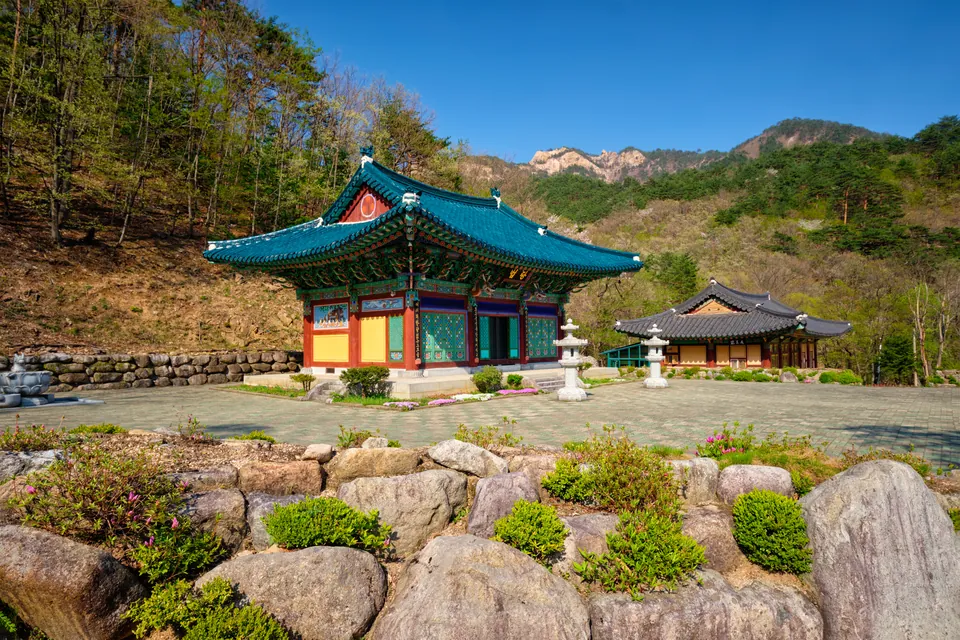
Gangwon for travel agents — Korea’s mountains and east coast.
East-coast beaches, Seoraksan’s peaks and Pyeongchang’s Olympic ski slopes — Korea’s mountain-and-sea region.
Gangwon pairs Korea’s most dramatic scenery with its winter-sports heartland: Seoraksan’s granite peaks, the east-coast beaches and coffee culture of Gangneung, and the Olympic ski resorts of Pyeongchang — all within easy reach of Seoul by KTX or road.
It is the region that turns a city trip into a journey. We handle the mountain-road transfers and the tight autumn-foliage and ski windows that Gangwon demands.
Agent tip: Gangwon is a two-season sell: autumn foliage at Seoraksan (October) and winter skiing at Pyeongchang — quote both to fill the year.
- 01Seoraksan National Park & cable car
- 02Pyeongchang Olympic ski resorts
- 03Gangneung beaches & coffee street
- 04Chuncheon lakes & rail bike
- 05Autumn foliage and winter snow
Gangwon — what your clients will experience.
Gangwon is the region that turns a city trip into a journey. It pairs Korea's most dramatic mountain scenery with its winter-sports heartland: Seoraksan's granite peaks and cable car, the Olympic ski resorts of Pyeongchang, and the east-coast beaches, sunrise points and famous coffee culture of Gangneung — all under two and a half hours from Seoul, much of it on the Olympic KTX line.
Autumn foliage is the headline. Seoraksan National Park turns brilliant red and gold through October, and the colour window is tight, so demand peaks hard and contracting early is the difference between selling the mountain and apologising for it. The cable car opens the peaks to all abilities while serious trails reward hikers, and Sinheungsa temple and the Sokcho fish market round out the days.
Winter is the second season. Pyeongchang's Yongpyong and Alpensia resorts hosted the 2018 Games and deliver reliable snow, lessons and lift passes from December to February, with Daegwallyeong's sheep ranches and highland temples adding scenery. Chuncheon's lakes, islands and dakgalbi street, and the Gangchon rail bike, make an easy nature day from Seoul on the ITX line.
For agents, Gangwon is the upgrade that differentiates a Korea program from a city-hopping one. It demands mountain-road transfers and tight seasonal windows — which we handle — and rewards clients with foliage, ski slopes and a fresh east-coast register. It slots between Seoul and the south or runs as its own two-to-four-night mountain-and-sea loop.
Best time to visit
Autumn (October) brings Seoraksan's spectacular foliage and the clearest east-coast skies — the region's demand peak, booked tight. Winter (December–February) is ski and snow season at Pyeongchang. Spring (April–May) carries late mountain blossom and azaleas, and summer (June–August) offers cool highland air, ranches and east-coast beaches, eased after the late-June to July monsoon.
Getting there & around
Seoul reaches Pyeongchang and Gangneung in around 1.5–2 hours on the high-speed KTX, and Sokcho/Seoraksan in 2.5 hours by express coach. Incheon (ICN) is the international gateway. Inside the region, mountain roads and the east-coast highway link the ski resorts, national park and beaches; we run private vehicles with English-speaking, winter-experienced drivers and our own coaches, dispatched by the 24/7 desk.
Gangwon province by province — the trade briefing.
Here is the province-by-province trade briefing for Gangwon — what each destination leads with, how clients reach it and the selling angle our desk uses. Every name links to the full agent guide.
Gangneung
Gangneung earns its place on a routing with Gyeongpo Beach, and the positioning writes itself: east-coast beaches, café culture and the gateway to Olympic country. Access runs via Seoul — 2 h by high-speed KTX. For the trade: sell as an east-coast escape by KTX; sunrise at Jeongdongjin and the coffee street are the signatures. Our regional ground team operates it end to end — transfers, licensed guides and contracted hotels on one invoice.
Sokcho (Seoraksan)
Sokcho & Seoraksan earns its place on a routing with Seoraksan National Park & cable car, and the positioning writes itself: Korea’s most dramatic national park meets a fresh-seafood port town. Access runs via Seoul — 2.5 h by express bus or car. For the trade: Seoraksan’s autumn foliage (October) is peak-of-peak — block early. Our regional ground team operates it end to end — transfers, licensed guides and contracted hotels on one invoice.
Pyeongchang
Pyeongchang leads with Yongpyong & Alpensia ski resorts — host of the 2018 Winter Olympics — Korea’s premier ski and alpine region. Access runs via Seoul — 1.5 h by high-speed KTX. For the trade: the ski headline; sell December–February with lessons and lift passes. Our regional ground team operates it end to end — transfers, licensed guides and contracted hotels on one invoice.
Chuncheon
Sell Chuncheon on its signature: lake city of dakgalbi, islands and K-drama romance. The anchor product is Soyang & Uiam lakes. Access runs via Seoul — 70 min by ITX train. For the trade: sell with Gapyeong/Nami as a lakes-and-rail-bike day; dakgalbi lunch is the signature. Our regional ground team operates it end to end — transfers, licensed guides and contracted hotels on one invoice.
4 destination guides in Gangwon.

Gangneung
East-coast beaches, café culture and the gateway to Olympic country.
Agent guide Full agent guide
Sokcho (Seoraksan)
Korea’s most dramatic national park meets a fresh-seafood port town.
Agent guide
Pyeongchang
Host of the 2018 Winter Olympics — Korea’s premier ski and alpine region.
Agent guide
Chuncheon
Lake city of dakgalbi, islands and K-drama romance.
Agent guideGangwon month by month — the agent calendar.
Seasonality decides whether a Gangwon program delights or disappoints, so here is the honest month-by-month picture our operations team works from. Because Gangwon is snow country, the calendar splits cleanly: a snowy ski season from December to February and a cool, green summer from June to August, with foliage and late cherry blossom either side. Use it to set expectations at the point of sale — clients forgive weather they were warned about and never forgive weather they were promised away.
January in Gangwon
Deep winter in Gangwon: reliable snow, temperatures from −10 to 0°C and the heart of the ski season at Yongpyong and Alpensia. This is peak-of-peak — block resorts and lift packages months ahead. Excursion capacity is managed day by day, with weather swaps decided before clients reach the lobby. Booking note: rail seats and flights fill before hotels do — sequence transport first.
February in Gangwon
Mid-winter in Gangwon delivers the season's most reliable snow and the busiest ski and snow-festival weeks. Demand and rates are at their highest — confirm well in advance. Excursion capacity is managed day by day, with weather swaps decided before clients reach the lobby. Booking note: keep one flex day in the program for weather swaps.
March in Gangwon
Late winter in Gangwon: still firmly snow country, with good snow early in the month softening toward spring by its end. A strong, slightly quieter window for skiers. On the ground, drivers and guides are confirmed the evening before each program day, whatever the month. Booking note: ideal for honeymoon upgrades at shoulder pricing.
April in Gangwon
Spring comes late to Gangwon: snow lingers on the peaks while late cherry blossom and the first greenery open in the valleys — cool days and beautiful highland light. Our operations desk re-checks every transfer and rail leg against the live conditions each morning this month. Booking note: peak-season cut-offs bite — confirm in writing to protect yourself.
May in Gangwon
Cool, fresh spring in Gangwon with azaleas in the hills and the green season opening. Pleasant touring weather; the sheep ranches and mountain temples come into their own. Hotel materialisation deadlines bite hardest in this window — the desk flags every cut-off date in writing. Booking note: ideal for honeymoon upgrades at shoulder pricing.
June in Gangwon
Early summer in Gangwon: mild, lower-humidity days of 20–24°C and the start of prime green season. A cool highland escape from the lowland heat, with rafting and the first hikes. Excursion capacity is managed day by day, with weather swaps decided before clients reach the lobby. Booking note: keep one flex day in the program for weather swaps.
July in Gangwon
Peak summer in Gangwon: comfortable 22–26°C with cool highland air while the lowlands swelter, eased by the late-June to July monsoon. Ranches, rafting and hiking at their best. Our operations desk re-checks every transfer and rail leg against the live conditions each morning this month. Booking note: rail seats and flights fill before hotels do — sequence transport first.
August in Gangwon
High summer in Gangwon, cool and green at 23–26°C — a refreshing mountain escape. The monsoon tails off; festivals and long daylight make this a green-season highlight. On the ground, drivers and guides are confirmed the evening before each program day, whatever the month. Booking note: confirm rooms 60–90 days out for this window.
September in Gangwon
Early autumn in Gangwon: crisp, clear days and the start of Korea's earliest mountain foliage at Seoraksan. A lovely, uncrowded touring month before the leaf-peeping crowds arrive. Hotel materialisation deadlines bite hardest in this window — the desk flags every cut-off date in writing. Booking note: family demand spikes — reserve connecting rooms early.
October in Gangwon
Brilliant autumn in Gangwon: Seoraksan's vivid foliage, crisp air and clear skies — the region's scenic peak. Quote leaf windows tightly, as peak colour moves week by week. Excursion capacity is managed day by day, with weather swaps decided before clients reach the lobby. Booking note: rail seats and flights fill before hotels do — sequence transport first.
November in Gangwon
Late autumn into early winter in Gangwon: the last foliage gives way to the first snows, temperatures dropping fast. A transitional month — confirm whether your dates want leaves or snow. Our operations desk re-checks every transfer and rail leg against the live conditions each morning this month. Booking note: rail seats and flights fill before hotels do — sequence transport first.
December in Gangwon
Winter takes hold in Gangwon: snow deepening, −8 to 0°C and the ski season opening in earnest. Early-season snow and pre-holiday value make it a smart insider window. On the ground, drivers and guides are confirmed the evening before each program day, whatever the month. Booking note: family demand spikes — reserve connecting rooms early.
Suggested Gangwon circuits for agents.
Multi-stop routings are where Gangwon earns repeat bookings — one region, several registers, no wasted repositioning. These two circuits are our proven sequences; both re-shape freely around your clients dates and budget.
The classic circuit
Sokcho & Seoraksan — Gangneung — Pyeongchang — Chuncheon (7 nights). The region's headline act: the anchor destination plus its strongest neighbours, paced for first-time visitors. The program opens via Seoul — 2.5 h by road and runs as one sequenced file: a single coordinator, luggage handled at every leg and contracted hotels throughout. Each stop contributes a different register — Sokcho & Seoraksan for Seoraksan National Park & cable car, Gangneung for Gyeongpo Beach, Pyeongchang for Yongpyong & Alpensia ski resorts, Chuncheon for Soyang & Uiam lakes — so the week never repeats itself. Net-rate costing with two hotel tiers comes back from the trade desk within 24 hours.
The depth circuit
Chuncheon — Pyeongchang — Gangneung (6 nights). For repeat clients and special-interest files: the quieter stops where the region shows its real character. The program opens via Seoul — 70 min by ITX and runs as one sequenced file: a single coordinator, luggage handled at every leg and contracted hotels throughout. Each stop contributes a different register — Chuncheon for Soyang & Uiam lakes, Pyeongchang for Yongpyong & Alpensia ski resorts, Gangneung for Gyeongpo Beach — so the week never repeats itself. Net-rate costing with two hotel tiers comes back from the trade desk within 24 hours.
Gangwon — frequently asked by agents.
When is Seoraksan's autumn foliage at its peak?
Usually mid to late October, when the granite peaks turn red and gold — the most spectacular and busiest window of the Gangwon year. The colour moves week by week and shifts with the season, so we quote a window rather than a single date, block hotels and the cable car early, and pair Seoraksan with Sokcho's fish market and Gangneung's beaches and coffee street.
Which ski resort should I sell in Gangwon?
Yongpyong and Alpensia at Pyeongchang are the headline — Olympic-grade slopes with lessons, rental and lift passes, under two hours from Seoul on the KTX. We sell ski December to February with all-inclusive packages, and quote the summer season too: ranches, temples, rafting and the Olympic venues fill the rest of the year, so the inventory works across the calendar.
How do clients get to Gangwon from Seoul?
The Olympic KTX line puts Pyeongchang and Gangneung within 1.5–2 hours of Seoul Station, the fastest way in. Sokcho and Seoraksan are best reached by express coach or private vehicle (about 2.5 hours), as no KTX serves them directly. We sequence transfers around the mountain roads with winter-experienced drivers and confirm conditions each morning in snow season.
Can Gangwon be combined with the east coast in one trip?
Yes — that pairing is the region's strength. We combine Seoraksan and Sokcho with Gangneung's Gyeongpo and Anmok beaches, the coffee street and the Jeongdongjin sunrise, then add Pyeongchang for ski or ranches. It runs as a two-to-four-night mountain-and-sea loop from Seoul, with one ground team handling the transfers, cable car and seafood lunches end to end.
How many nights does a Gangwon program need?
Plan two to four for a satisfying program — enough to cover the headline experiences without the pace feeling punitive. Shorter visits work as add-ons to a Seoul or Busan stay; longer ones suit special-interest files. The trade desk will tell you honestly when a client's wish list needs another night, and when it does not.
What is the best gateway for Gangwon?
Route clients through Seoul (Incheon/Gimpo), with the Olympic KTX line to Pyeongchang and Gangneung and express coaches to Sokcho. Explera meets every arrival with a GPS-tracked vehicle and an English-speaking driver, monitored against the live flight number, and the regional team sequences onward legs so the routing never backtracks. Send your clients' arrival city and the desk returns the optimal entry point with the quotation.
Can Explera run series departures in Gangwon?
Yes — series operations are core business here: the Seoraksan, Pyeongchang and Gangneung programs run on scheduled coaches and our own vehicles, so series costing stays flat. We build allotment proposals around your expected volumes with sensible release-back dates, assign consistent guides and vehicles across departures, and report load factors so you can steer marketing. One contracting conversation covers the whole season.
What hotel standard should agents expect in Gangwon?
Set expectations precisely: ski resorts and condos at Pyeongchang, beachfront and city hotels at Gangneung, and lodges near Seoraksan — peak ski and foliage space goes first. We contract the strongest property in each band, state plainly what each delivers, and never let a brochure category paper over a real difference. Room-type guarantees, connecting rooms and event space are confirmed in writing at booking, not discovered at check-in.