
Quick answer: Photography-themed tours are one of the fastest-growing niches in Korea inbound, because photographers travel in the shoulder and off-peak seasons, stay longer, and pay a premium for access others never see. The whole product lives or dies on three things a DMC controls and an OTA cannot: golden-hour and sunrise timing, location permits, and on-the-ground know-how. A well-built photo program schedules stops around the light rather than the clock, secures early or exclusive access to sites like Gyeongbokgung and Bukchon before the crowds, handles drone permissions and tripod-friendly pacing, and pairs a fixer-guide who knows the exact vantage points by season — cherry blossom, foliage, or snow. Explera DMC Korea operates these with licensed photo-guides, permit handling and net group rates across Seoul, Busan and Jeju.
Why photography tours are a growing B2B niche
Photography travellers are the ideal group client, and most agents underquote them. They are not price-shopping a generic city tour — they are buying access to a specific frame at a specific moment, and that changes the economics of the file completely:
- They travel off-peak — the best light and the best colour fall outside high season: blossom in early spring, foliage in late autumn, snow in deep winter. Photo groups fill the exact weeks that standard leisure programs leave empty.
- They stay longer — chasing light across Seoul, Busan and Jeju turns a three-night city break into a six- or seven-night circuit. Duration is the single largest revenue lever in the whole product.
- They pay for access, not inclusions — sunrise entry, a permitted rooftop, a private oreum at dawn. Photographers accept premium pricing for a frame nobody else can shoot, and that access is exactly what a DMC delivers and an OTA cannot.
- They are led by tour ambassadors — photo tours are usually assembled by a workshop leader, a camera club or an influencer with a following. Win one and you win a repeating series, plus the social proof that sells the next departure.
- They are demanding but loyal — get the light, the permits and the pacing right and the group rebooks the destination for a different season. The same client base resells across FIT, small-group workshops and affinity charters.
Signature shooting locations
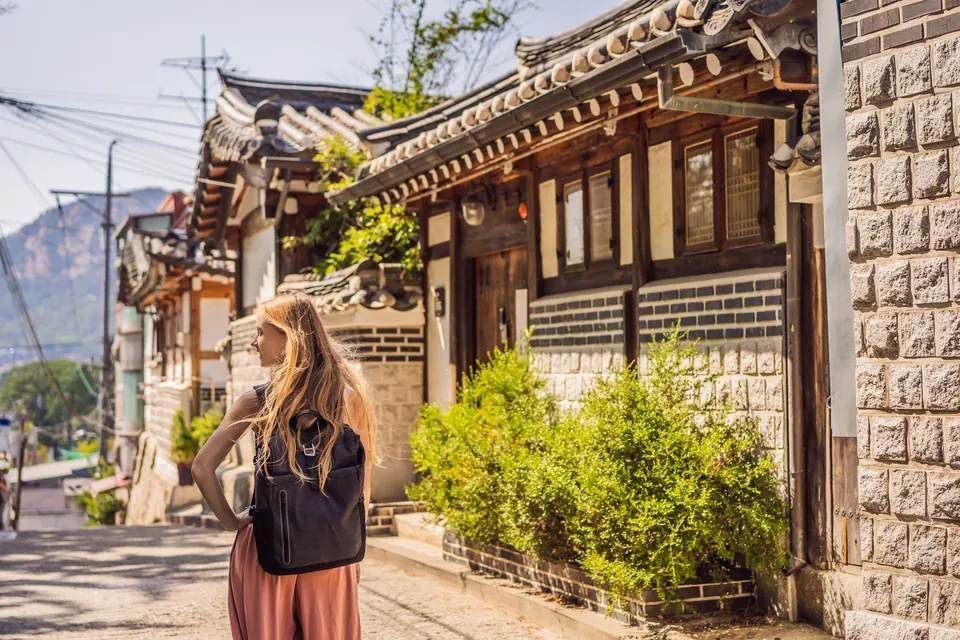
Bukchon Hanok Village & Gyeongbokgung at sunrise
Bukchon Hanok Village is Seoul's defining frame — tiled hanok rooftops stacked against the modern skyline — and it only works before the crowds arrive. An early start puts the group on the classic Bukchon-ro 11-gil viewpoint in soft first light, with residents' privacy respected and quiet hours observed. Pair it with Gyeongbokgung at opening or a pre-arranged sunrise slot: empty courtyards, the throne hall in gold light, and a hanbok shoot staged against the palace before the day-trippers appear.
N Seoul Tower & the Han River night skyline
N Seoul Tower on Namsan is the blue-hour anchor of any Seoul photo day, shooting the city grid as it lights up. Down at river level, the Han River night skyline — from Nodeul, Banpo or the Ttukseom foreshore — delivers long-exposure reflections, the Banpo Bridge fountain and bridge light trails. Both are tripod-heavy stops that reward a guide who knows where setups are permitted and where they are not.
Gamcheon Culture Village, Busan
Gamcheon Culture Village is the country's most photogenic hillside — pastel houses cascading down the slope in a painterly grid. It shoots best in late-afternoon side light, and the tight lanes demand small-group movement rather than a full coach parked below. It anchors a southern leg alongside Busan's Haedong Yonggungsa temple and the Gwangan Bridge night view.
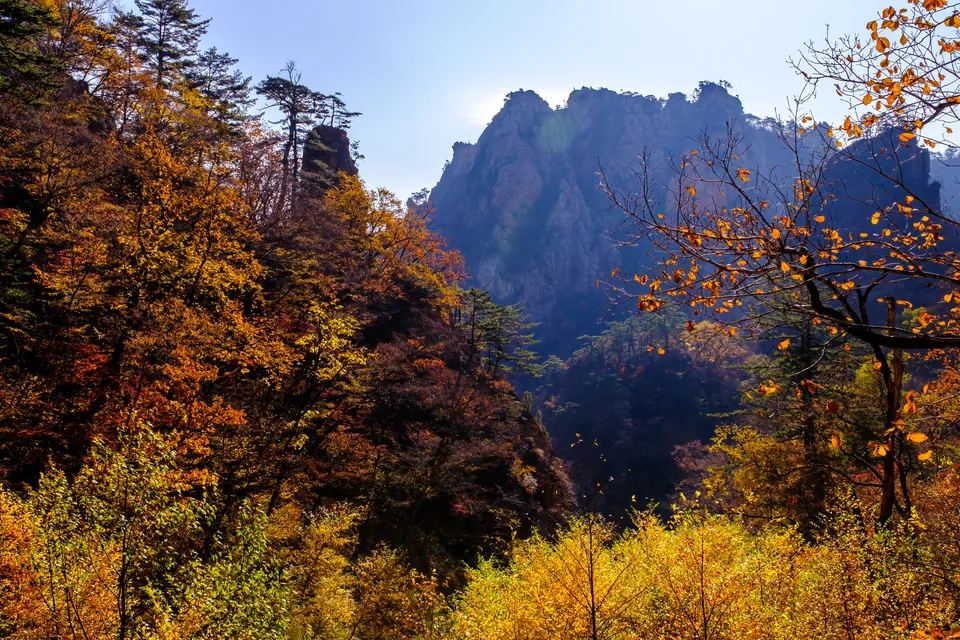
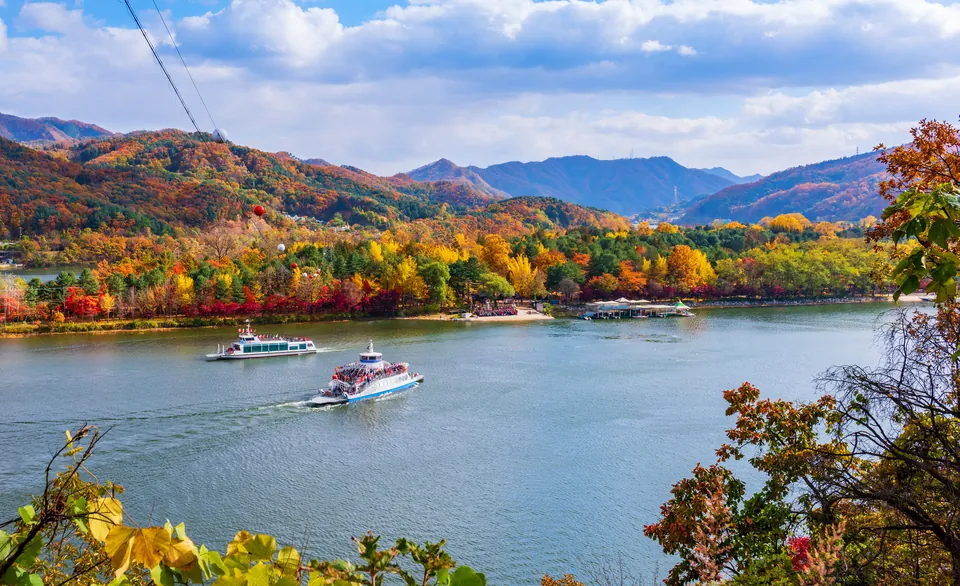
Seoraksan & Naejangsan autumn foliage
For roughly three weeks each autumn, Seoraksan in Gangwon and Naejangsan in Jeolla turn the mountains into layered reds and golds. These are the marquee foliage frames of the Korean calendar, and their timing shifts year to year — which is precisely why they need a DMC watching the colour reports and holding flexible departure dates rather than a fixed brochure week.
Jeju coast & oreum
Jeju gives a photo group an entirely different palette: black volcanic coastline, Seongsan Ilchulbong crater at sunrise, and the island's oreum — the grassy parasitic cones that glow at dawn and dusk. The southern and eastern coasts, the canola and buckwheat fields in season, and the haenyeo diving villages round out a two- or three-night island leg that no mainland itinerary can match.
Boseong tea fields & Jinhae cherry blossoms
The terraced Boseong green tea fields in South Jeolla are a year-round graphic subject — sweeping green contour lines in summer, misty and moody in the shoulder seasons. In spring, Jinhae hosts Korea's most famous cherry-blossom festival, with the Yeojwacheon stream and the Gyeonghwa railway line drawing photographers from across Asia. Both are strongly seasonal and both reward early-morning access before the tour buses arrive.
Program design: building around the light
A photography itinerary is not a sightseeing itinerary with a camera bolted on. It is scheduled around the sun, and the details below are what separate a photo tour that delivers from one that frustrates:
- Golden-hour and blue-hour scheduling — stops are timed to the light, not to a fixed 9-to-5 coach day. That means the group is on location for the hour before sunset and the twenty minutes after, and back out again before dawn.
- Sunrise and early access — pre-arranged early or exclusive entry to Gyeongbokgung, Bukchon, Seongsan Ilchulbong and mountain trailheads, so the group shoots clean frames before the crowds.
- Hanbok photo shoots — pre-booked hanbok near Gyeongbokgung and in Jeonju gives free palace entry, styled subjects for the group and a straightforward commission line for the agent.
- Drone-permit guidance — Korea regulates drone flight tightly, with no-fly zones over central Seoul and near the DMZ and airports. A DMC files the flight approvals in advance and briefs the group on where flying is legal, so nobody's equipment is confiscated on day one.
- Seasonal timing — the departure is anchored to the phenomenon: blossom forecast in spring, foliage colour reports in autumn, snow probability in winter. Dates are held flexible and confirmed against live conditions.
- Pacing for tripods and setups — fewer stops, longer dwell times. Photographers need room to work a scene, change lenses and wait for the light, not a checklist of ten stops in a day.
Group logistics: what makes a photo tour run
The operational build is where photo groups are won or lost. These are the details to specify at contracting:
- Photographer-friendly coach timing — early departures, late returns and flexible pickup windows that follow the light rather than the standard tour schedule.
- Small-group vans for tight spots — Gamcheon's lanes, Bukchon's alleys and Jeju's coastal tracks need nimble vehicles, not a 45-seat coach that cannot get close.
- A local fixer-guide — someone who knows the exact vantage points, the current access rules and the shot by season, and who can adjust the plan in the field when the weather turns.
- Model and hanbok arrangements — for portrait and lifestyle workshops, pre-arranged models, hanbok styling and location releases keep the shoot moving and legal.
- Weather and light contingencies — a reorderable itinerary so an overcast sunrise becomes an interior or market shoot, and the clear morning is saved for the mountain.
Sample 6-day photo itinerary
- Day 1 — Seoul, blue hour: arrival and check-in · N Seoul Tower and Namsan at blue hour · Han River night skyline and Banpo Bridge long exposures.
- Day 2 — Seoul, sunrise to sunset: Bukchon Hanok Village at first light · Gyeongbokgung early access with a hanbok shoot · afternoon at Changdeokgung and Ihwa mural village · evening street photography in Euljiro.
- Day 3 — South by KTX to Busan: KTX to Busan · Gamcheon Culture Village in late-afternoon side light · Haedong Yonggungsa and the Gwangan Bridge night view.
- Day 4 — Boseong & the Jeolla coast: sunrise at the Boseong tea fields · seasonal add-on — Naejangsan foliage in autumn or Jinhae blossoms in spring · overnight en route or fly to Jeju.
- Day 5 — Jeju, dawn crater: Seongsan Ilchulbong at sunrise · eastern oreum and the black volcanic coast · canola or buckwheat fields in season · haenyeo village at golden hour.
- Day 6 — Jeju finale: southern coast and waterfalls at first light · a final oreum for the closing frame · airport transfer.
The itinerary flexes by season: swap in Seoraksan and Naejangsan for a late-October foliage build, Jinhae and Yeouido for an early-April blossom build, or Deogyusan and Taebaek for a January snow build. Explera reorders days against the live forecast so the group is always in the right place for the light.
B2B net rates and Explera support
Explera DMC Korea builds and operates photography programs for the trade as fully permitted, light-scheduled modules:
- Licensed photo-guides who know the vantage points, the seasonal timing and the current access rules — in English, Spanish, French, German, Portuguese, Arabic, Japanese, Chinese and Russian
- Location-permit and early-access handling for palaces, hanok villages, sunrise sites and restricted viewpoints, plus drone flight approvals filed in advance
- Net group rates on entries, hanbok rental, model and styling arrangements, and small-group vans for the tight locations that coaches cannot reach
- Seasonal departures anchored to blossom, foliage and snow forecasts, with flexible dates held and confirmed against live conditions
- 24/7 operations support for every departure, from the first pre-dawn pickup to the last golden-hour frame
IATA: 96215733 | Email: b2b@explera.kr | WhatsApp: +66 93 656 8090
Request photography tour net rates at b2b.expleradmc.com or contact the trade desk — send your group size, the season your clients want to shoot and travel dates, and our team returns a priced, permitted, light-scheduled photo itinerary within one business day.