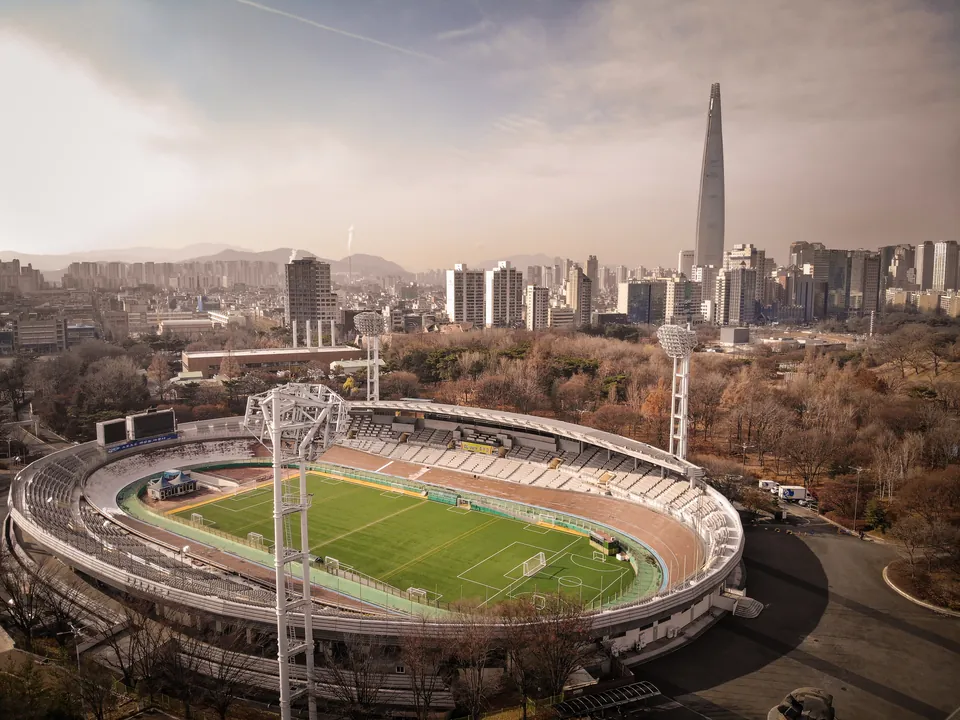

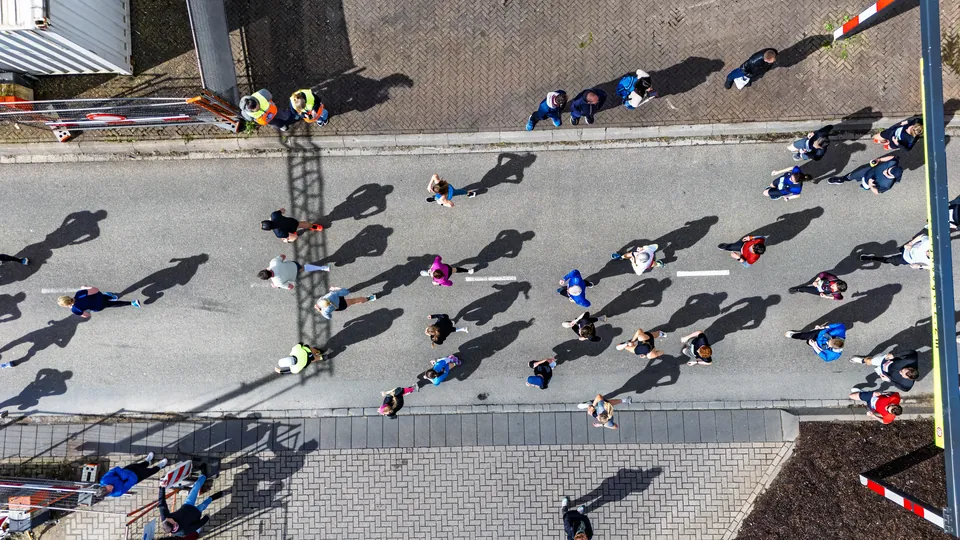
Quick answer: A spectator trip and a participation trip look similar on a quotation and behave nothing alike. The client who is running has an entry in their own name, a start time they cannot move, a bag they must drop at a set place before a set hour, and a body that will not do a full sightseeing day afterwards. Korea has a substantial road-race calendar and an autumn and spring season that suit it: the Seoul Marathon is set for 21 March 2027, with overseas registration having opened on 1 September 2026, and full-course entry gated on a qualifying time of under five hours net, while the 10K asks for no qualifying record. Chuncheon's international marathon, a World Athletics Gold Label race since 2013, is a late-October fixture, though listings for its next edition disagree and the organiser is the only source worth quoting. Explera DMC Korea builds the trip around the start line rather than around the itinerary, and is clear that the entry itself is the runner's to obtain.
What the calendar actually gives you
- The Seoul Marathon is set for 21 March 2027. Overseas registration opened on 1 September 2026 at 10:00 Korean time — the entry window, not the race, is the date that decides whether you have a group at all.
- The full course carries a qualifying time. Entry is gated on a sub-five-hour net time; the 10K course asks for no qualifying record. That single fact splits most groups in two, and it has to be asked about before anyone is sold anything.
- Chuncheon's international marathon is the autumn anchor, run in late October and holding World Athletics Gold Label status awarded in 2013.
- Its next edition date is not settled across listings — at least one aggregator gives a February date against everyone else's late October. Take the date from the organiser and from nowhere else.
- Spring and autumn carry the calendar. Korea's summer is humid and its winter is cold enough to be a genuine risk for an unacclimatised field, which is why the races cluster where they do.
- Cycling and trail events sit alongside the road races, with their own entry mechanics and, usually, their own bike-transport problem.
What makes a participation trip different
The entry belongs to the runner, not to you
Race entries are personal, usually non-transferable, and often capped or balloted. You are not selling the entry; you are selling everything around it. Say that plainly in the contract, because a client who assumed otherwise has a very bad morning.
The start time fixes the whole file
Road races start early. That sets the hotel, because a forty-minute transfer at five in the morning is a different proposition from a ten-minute walk, and it sets the night before, which is not a night for a long dinner.
Race day is not a touring day
After a marathon your client will manage a shower, a meal and very little else. Programme the afternoon as recovery and put the sightseeing on the day after — or you will have sold a day that nobody uses.
The people who came to watch need their own plan
Every runner brings one or two supporters with six hours to fill and one very specific request: to be at a point on the course at roughly the right time. That is a transport and timing job, and it is the half that gets forgotten.
The operational checklist
- Confirm the registration window before the race date. A sold-out entry list ends the trip regardless of what else is booked.
- Ask every participant about the qualifying time early. It is the fastest way to find out that half the group belongs on the shorter course.
- Book the hotel against the start area, not the city centre. Proximity beats a better address on race morning, every time.
- Plan the expo or pack collection as a real appointment. It has its own venue, its own hours and its own queue, and it usually needs the runner in person with identification.
- Sort the bag drop and the finish-area reunion. Phones are in the bag, the finish area is crowded, and the group needs a meeting point agreed before anyone starts.
- Arrange breakfast for the actual start time. Hotel breakfast service frequently begins after a road race has started; this needs to be asked for in writing.
- Brief the supporters on the transport. Road closures move the subway from convenient to essential, and a coach will not get where a supporter wants to be.
- Put a recovery afternoon and a late checkout in the plan, not as an upgrade but as the shape the day actually has.
Where the margin sits
- In the days either side, not in race day. A group that flew for a race will usually stay for a week if the week is good, and that week is an ordinary itinerary you already know how to sell.
- In the supporters' programme. They are a group of their own with a fixed interruption in the middle of one morning.
- In doing the logistics nobody else wants to. An early transfer, a packed breakfast and a known meeting point are cheap to provide and are what the client remembers.
- In the club and charity market. Running clubs travel together, return annually and recruit their own numbers; one good year is a standing booking.
- Not in the entry. Do not build a margin on something you do not control and may not be able to deliver.
- In the second destination. A race in Seoul and three days somewhere else is a better week than six days in one city, and the coach movement is yours.
Race weekends handled on the ground
Explera DMC Korea operates participation-event travel for the trade with the start line as the fixed point: hotels chosen against the start area rather than the postcard; transfers timed to a gun time rather than a breakfast service; a packed breakfast arranged in writing when the kitchen opens too late; pack collection treated as a scheduled appointment with the right documents in hand; a bag-drop and finish-area plan agreed with the group before race morning; a separate supporters' programme with a viewing point and a realistic way of reaching it; a recovery afternoon and a late checkout in the plan from the start; and a 24/7 operations desk on Korea ground time.
We do not sell race entries — those are personal to the runner and obtained from the organiser — and we will say so to your client in writing. Send the event, the dates and the split between runners and supporters to b2b@explera.kr or WhatsApp +66 93 656 8090. Explera DMC Korea is IATA TIDS-registered (96215733) and an ASTA member (#900408341).
Where this fits in our Korea programmes
The pages below carry the operational detail behind this briefing.
- Services: Group travel & GIT in Korea · Transportation & coaches in Korea · 24/7 emergency support in Korea
- Destinations: Seoul · Gangneung · Jeju