

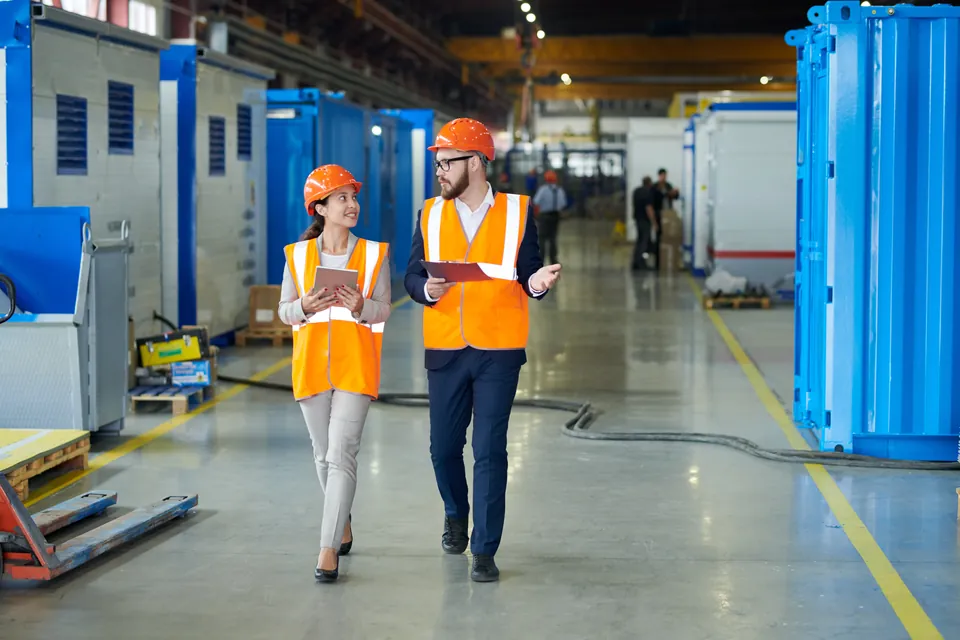
Quick answer: An industry study visit takes a corporate or institutional group to see how Korean companies work: a plant, a showroom, a research centre or a smart-city project, usually with a meeting attached. The host decides whether to open its doors, and many decline general requests or offer only a showroom. A clear business reason, a full delegation list and several weeks of lead time improve the odds. Expect ID checks, photography limits and visitor agreements, brief a technical interpreter, and always hold a fallback. Explera DMC Korea prepares the request, the paperwork and the logistics.
What buyers mean by a study visit
- Benchmarking: a delegation from one industry visits its Korean counterparts to see a process, a product line or a standard in practice.
- More than a walk-through. The best visits include a presentation and a meeting with someone at the right level, not only a tour.
- Typical groups: companies, industry associations, chambers of commerce, universities and public agencies.
- Typical hosts: manufacturers, research centres, logistics and port operators, hospitals, retailers and planned business districts such as Songdo in Incheon.
Why the host decides
- A plant floor is the host's to open. Many companies decline tourism-style requests or offer a corporate showroom instead.
- A stated business reason helps. The host wants to know who is coming, why, and what they hope to learn.
- Seniority and fit matter. A delegation that matches the host's own interests is more likely to be accepted.
- Lead time is weeks, not days. Approval goes through several internal steps, and the host may cap the headcount.
What the host will ask for
- A delegation list: names as in passports, nationality, company and job title.
- A purpose letter explaining the visit and the questions the group wants answered.
- A visitor agreement or NDA, and rules on photography and phones, which are often banned on the floor.
- Dress and safety: closed shoes, sometimes safety shoes, and a briefing at the gate.
- Punctuality. Security checks and coach access at the gate take time; build a buffer into the transfer.
Interpreting and the meeting
- Use a technical interpreter, briefed in advance with the group's questions and a short glossary.
- Prepare the questions and share them with the host beforehand; it shapes who they put in the room.
- Keep protocol simple: business cards with both hands, a modest gift, and a clear speaker for the delegation.
- Hold a debrief the same day, while the notes are fresh.
Always hold a fallback
Never sell a named plant visit as confirmed until the host confirms in writing, and expect that a host can cancel at short notice for its own operational reasons. Explera DMC Korea prepares the request and the paperwork, briefs the interpreter, and keeps a second host or a public alternative — a showroom, a science museum or a business-district tour — ready for the same slot.
Send your dates, pax, industry and objectives to b2b@explera.kr or WhatsApp +66 93 656 8090. Explera DMC Korea is IATA TIDS-registered (96215733) and an ASTA member (#900408341); our KTO and KATA registrations are in application.
Where this fits in our Korea programmes
The pages below carry the operational detail behind this briefing.
- Services: Group travel & GIT in Korea · Guide services in Korea · Transportation & coaches in Korea
- Destinations: Seoul · Incheon · Busan