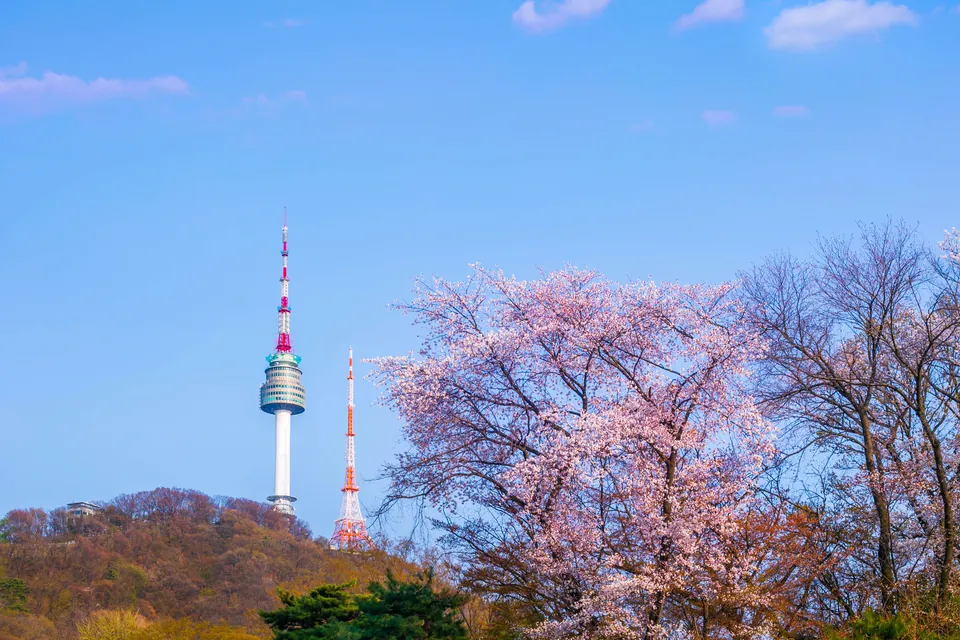


Quick answer: In spring, and on some days in late winter, Korea can have poor air quality from fine dust and from yellow dust blown in from the deserts of the Asian mainland. It varies from day to day and does not affect every trip, but it is the one spring condition clients rarely hear about in advance. The official forecasts come from AirKorea for particulate levels and from the Korea Meteorological Administration for yellow dust. On a bad day the programme usually carries on with more time indoors; clients with asthma or heart and lung conditions should ask their doctor before travel. Explera DMC Korea watches the forecast and holds indoor alternatives for outdoor days.
What it is, and when it happens
- Fine dust is the everyday Korean term for airborne particulates, reported as PM10 and PM2.5. Levels rise and fall with the weather.
- Yellow dust is sand and dust carried from the deserts of the Asian mainland on spring winds. It arrives in episodes, not as a season-long haze.
- Spring is the main window, with some episodes in late winter. Many spring days are perfectly clear; the point is to plan for the days that are not.
Where the forecast comes from
- AirKorea, run by the Korean environment authorities, publishes real-time readings and next-day forecasts for particulates.
- The Korea Meteorological Administration issues yellow dust forecasts and advisories.
- Public alert texts go to phones in Korea on high-concentration days. They are in Korean, so the guide should tell the group what an alert means rather than leave it to a translation app.
- A day or two ahead is the useful window. That is when a substitution can still be made as a change of plan rather than a cancellation.
What changes on a poor-air day
- The programme usually runs. Palaces, markets and city touring continue; the guide shortens long outdoor stretches.
- Hikes, cycling and long outdoor walks are the items worth swapping for a museum, a covered market or an indoor experience.
- Viewpoints lose their view. An observatory or cable car on a hazy day is poor value; move it if the forecast allows.
- Masks help. KF94 masks are sold in convenience stores and pharmacies all over Korea; the guide can hand them out on the coach.
What to tell clients before departure
- Mention it plainly in the joining instructions for spring departures, alongside weather and clothing.
- Clients with asthma, heart or lung conditions should ask their doctor before travel and bring their usual medication.
- Set expectations on views — mountain panoramas and skyline photographs depend on the day.
- Explain the flexibility: outdoor items may be moved within the trip, and the tour leader will announce it.
Watched on the ground
Explera DMC Korea checks the forecasts daily during spring programmes, holds named indoor alternatives for the outdoor days, and tells the agent before a change is made, not after.
Send your spring dates, pax and draft programme to b2b@explera.kr or WhatsApp +66 93 656 8090. Explera DMC Korea is IATA TIDS-registered (96215733) and an ASTA member (#900408341); our KTO and KATA registrations are in application.
Where this fits in our Korea programmes
The pages below carry the operational detail behind this briefing.
- Services: Group travel & GIT in Korea · Tours & activities in Korea · 24/7 emergency support in Korea
- Destinations: Seoul · Busan · Jeju