
Quick answer: Korea's traditional performing arts are grouped under the word gugak, national music, and include pansori, a sung story for one singer and a drummer that is on UNESCO's intangible heritage list; samulnori, a driving four-instrument percussion ensemble; and court and folk dances such as the fan dance. A group can see them at the National Gugak Center and at theatres such as Jeongdong Theater in Seoul, and outdoors for free at the royal guard ceremony. Non-verbal shows are the easy evening alternative for mixed-language groups. Explera DMC Korea matches the performance to the group and books seats together.
What a group can see
- Samulnori. Four percussion instruments — two drums, a large gong and a small gong — played fast and loud. The easiest traditional form for any audience, because it needs no translation.
- Pansori. A long sung story performed by one singer with a drummer, recognised on UNESCO's intangible heritage list. Powerful, but best in excerpts, with the story briefed in advance.
- Court and folk dance. The fan dance, drum dances and masked dances are colourful and visual, and often form part of a mixed programme.
- Court music. Slow, formal ensemble music from the royal court and ancestral rites — rewarding for a specialist group, less so as a general evening.
Where to see it
- The National Gugak Center. The national institution for traditional music, in southern Seoul, with a regular programme of concerts through its season.
- Theatres with a traditional programme. Jeongdong Theater, near Deoksugung, is known for traditional performances aimed at visitors, with surtitles or programme notes.
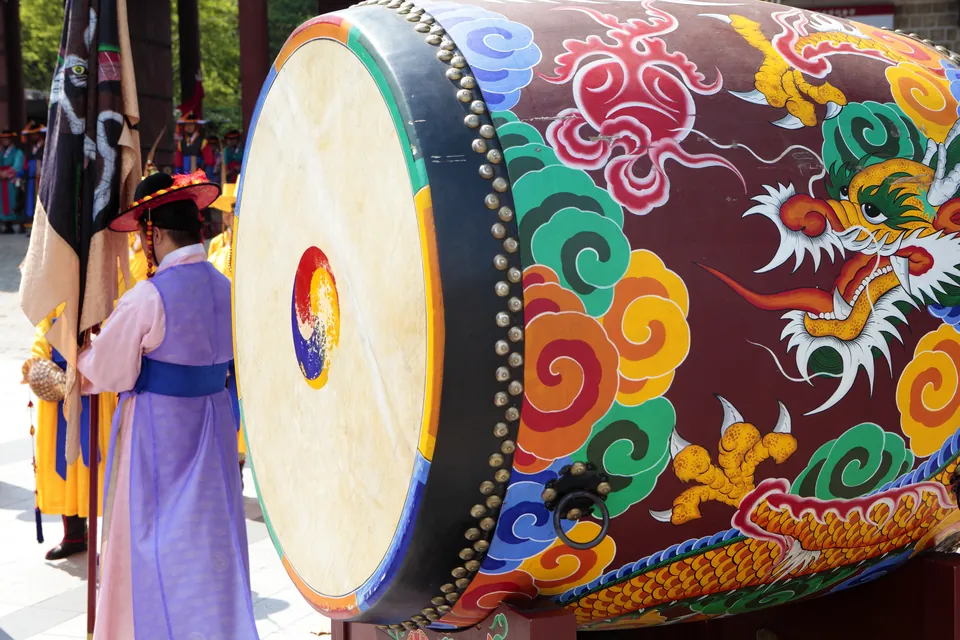
- The royal guard ceremony. Held outdoors at the palace gates on published days, with drums and costume, and free to watch — a good short stop inside a palace visit.
- Private performances. For an incentive dinner or gala, a samulnori troupe or fan-dance group can perform at the venue itself.
The non-verbal shows
- Built for visitors. Long-running non-verbal shows, such as Nanta with its kitchen percussion, tell their story without dialogue, so a mixed-language group follows them easily.
- Not traditional, and that is fine. They borrow rhythm from samulnori but are modern entertainment. Sell them as a fun evening, not as heritage.
- Easy logistics. Fixed daily schedules, central theatres and group seating make them the simplest evening to add.
Getting it right for a group
Book early and book together: the best traditional concerts are in smaller halls, and a group of thirty split across a theatre loses the shared experience. Check the day — many venues do not perform every night, and schedules follow the venue's own season.
Brief the story. A few minutes from the guide before a pansori excerpt or a court dance turns an unfamiliar form into the highlight of the day. And match the choice to the group: samulnori or a non-verbal show for a general audience, a full gugak concert for a culture-focused one.
Matched and booked
Explera DMC Korea chooses the performance for the group's interests and schedule, books seats together, times the coach around the show and briefs the guide on the story.
Send your dates, pax and group profile to b2b@explera.kr or WhatsApp +66 93 656 8090. Explera DMC Korea is IATA TIDS-registered (96215733) and an ASTA member (#900408341); our KTO and KATA registrations are in application.
Where this fits in our Korea programmes
The pages below carry the operational detail behind this briefing.
- Services: Tours & activities in Korea · Guide services in Korea · Group travel & GIT in Korea
- Destinations: Seoul · Gyeongju · Busan