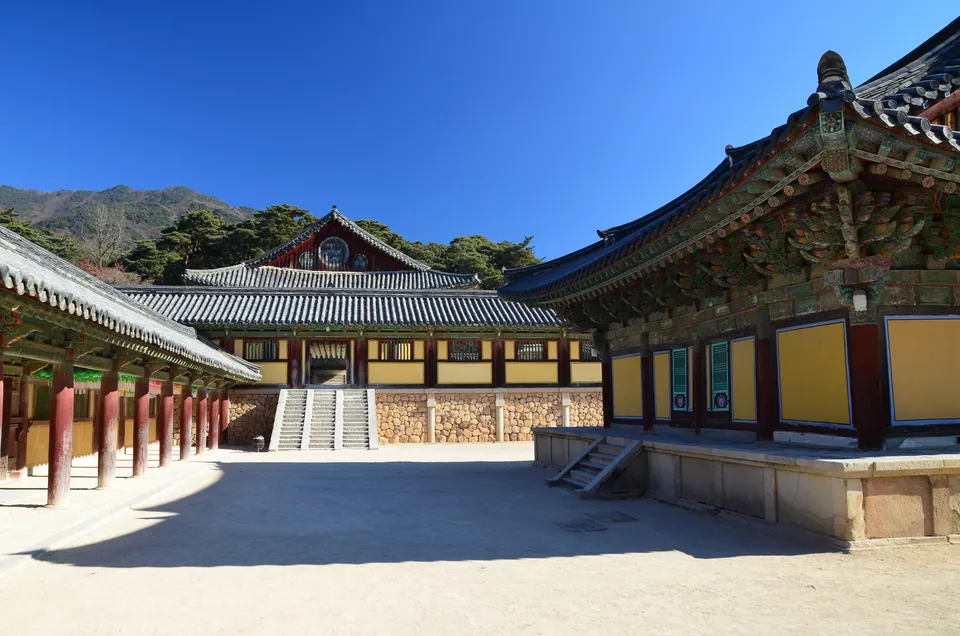


Quick answer: A group that has already seen Korea once has done Seoul's palaces, a market, perhaps the DMZ and Busan. Offering them the same circuit with a new hotel sells badly. The second trip works when it goes deeper rather than wider: fewer cities, longer stays, a theme, and regions the first trip only passed through — the old Silla capital at Gyeongju, Jeonju's hanok village and food, Andong and Hahoe, the east coast, Jeju beyond its best-known sights. Seoul stays in the programme, but as the arrival and departure point, not the headline. Explera DMC Korea designs second-trip programmes around what the group has already done, so nothing is repeated by accident.
What changes on a second trip
- The client already knows the headline sights. Ask what the group did last time before designing anything; the fastest way to lose a repeat client is to show them the same palace.
- Depth beats coverage. Two regions properly seen are worth more than five cities touched.
- Longer stays in fewer hotels. Fewer packing days, more time in each place, and room for a slower day.
- Rail and regional transfers do more of the work, so the programme needs realistic travel days rather than a Seoul-style day-trip rhythm.
Where a second trip goes
Gyeongju and the south-east
The old Silla capital rewards a night or two rather than a day trip from Busan, and pairs naturally with the south coast. Our Gyeongju guide covers the group logistics.
Jeonju and the south-west
Jeonju's hanok village and its food are the draw, and the wider region suits a group that wants to eat and walk rather than tick sights.
Andong and the heritage interior
Andong and the Hahoe folk village give a group a quieter, more traditional Korea than the cities — best with an overnight, which our Andong guide covers.
The east coast and Jeju, beyond the obvious
Gangneung and the Gangwon coast for sea, mountains and a slower pace; Jeju for walking and landscape rather than the handful of sights every first trip includes.
Designing it
- Build around a theme — food, crafts, temples, walking, tea — so each region has a reason to be there.
- Overnight in the regions instead of returning to Seoul each night. The evening in a regional town is often the part people remember.
- Guides with regional depth. A guide who knows one region well gives a second-trip group more than a generalist can.
- Keep one Seoul night at each end for arrival and departure, and use it for something new rather than the first-trip highlights.
Selling it to the client
- Say what is different, not only what is included. A repeat client is buying the part of Korea they have not seen.
- Show the travel days honestly. Regional depth costs transfer time; a programme that hides it disappoints on day three.
- Offer one familiar anchor — a favourite neighbourhood or restaurant from last time — if the client asks for it. It makes the new parts easier to sell.
Designed around the first trip
Explera DMC Korea builds second-trip programmes from what the group has already done: themed routes through the regions, regional overnights, guides chosen for local depth, rail and coach combined around realistic travel days, and a 24/7 operations desk on Korean ground time throughout.
Send your dates, pax and what the group did on their first trip to b2b@explera.kr or WhatsApp +66 93 656 8090. Explera DMC Korea is IATA TIDS-registered (96215733) and an ASTA member (#900408341); our KTO and KATA registrations are in application.
Where this fits in our Korea programmes
The pages below carry the operational detail behind this briefing.
- Services: Group travel & GIT in Korea · Tours & activities in Korea · Rail & transfers in Korea
- Destinations: Gyeongju · Gangneung · Jeju